
 Login
Login


What to do with limes?
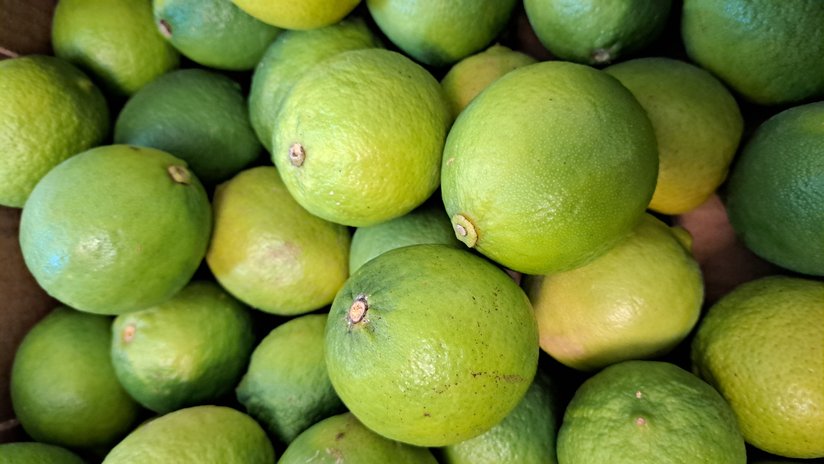
Limes are more aromatic but also milder in flavour than lemons and usually have no seeds. Every part of them, from the juice to the peel, can be used and enjoyed. Food writer Sophia Schilik has put together these tips for us to help you get the most out of the fruit.
Honey and lime vinaigrette and Thai lime dressing
A different take on salad dressing: adding the juice of a fresh lime gives any citrus-based vinaigrette an exotic twist. It’s not just Asian dishes that benefit from this tangy, spicy flavour. It also goes wonderfully with crisp spring salads with a grassy, green character, and anything featuring seafood or avocado.
Honey and lime vinaigrette:
Mix the juice of 11⁄2–2 limes with 1 tsp clear honey and 2 tsp grainy mustard. Whisk in 5 to 6 tbsp olive oil until the vinaigrette becomes creamy. Season with salt and pepper.
Goes well with:
a crisp salad of fennel and green asparagus, a green bean and sugar snap pea salad with goat’s cheese, a quinoa salad with avocado, feta and cucumber, a rice salad with diced sweet potato and mint, or a chicken salad.
Thai lime dressing:
For an Asian-style dressing, mix the juice of 11⁄2–2 limes with a finely grated clove of garlic, finely chopped green chilli, 2–3 tbsp fish sauce and/or light soy sauce, 1⁄2 tbsp brown sugar (or honey) and 5–6 tbsp peanut or sesame oil. Season to taste.
Goes well with:
Glass noodle salad with prawns, bun cha with meatballs and coriander, sophisticated seafood salads, Thai ‘coleslaw’ with finely sliced red cabbage, carrots, red onions and grapefruit segments.
Asian peanut sauce
For this creamy, aromatic sauce with a hint of lime, you need little more than a rummage in the cupboard and a strong fondness for peanut butter, which, as we all know, makes almost everything better.
To make it, blend the juice of 1 lime with 150 g peanut butter, 1 tbsp liquid sweetener, 1–2 tbsp light soy sauce, 1 clove of garlic (grated) and a little grated ginger (optional) in a food processor or blender until smooth. Tamarind paste also works well, for example in Indian dishes. For an Indonesian variation, use coconut milk. Depending on the desired consistency – should it be more of a dip or a sauce? – add a little more water or peanut butter. Season to taste with salt and chilli.
Pairs well with:
shrimp dumplings, spring rolls, fried rice noodles with plenty of crunchy vegetables, satay-style grilled chicken, tofu or tempeh skewers, colourful stir-fries, steamed leafy greens and gado-gado variations.
Lime and Yoghurt Dip
Sometimes a dish just needs a little burst of freshness or tang. Yoghurt-based dips enhanced with lime combine the best of both worlds: the slightly tangy flavour and creaminess of the dairy product with the zesty nature of the lime.
To make it, mix 200 g Greek yoghurt with the zest and juice of 1⁄2–1 lime, salt and finely grated garlic. For Middle Eastern dishes, add 2 tbsp tahini. For Indian dishes, fold in finely chopped lime pickles.
Pairs well with:
spicy lentil salads, homemade köfte or falafel with plenty of fresh herbs, oven-baked stuffed aubergines, homemade sweet potato wedges from the air fryer, roasted Brussels sprouts with lime vinaigrette, crispy pan-fried courgette fritters, grilled lamb chops, Indian potato curry, stuffed naan breads with fried paneer.
Lime butter
Butter, whether homemade or shop-bought, can be flavoured not only with herbs, pepper or garlic; the finely grated zest of untreated limes is also a great flavour booster.
To make it, cream 125 g of soft butter in a bowl until smooth. Mix in a little salt, 1⁄2 tsp of lime zest and a small splash of lime juice. Shape the mixture into a long roll on a piece of baking paper (25 x 20 cm), roll it up in the paper and twist the ends together. Chill for approx. 4 hours. To serve, slice the butter roll.
To brush over grilled food, you can also gently warm the butter in a small saucepan, then stir in the lime zest.
Pairs well with:
Grilled sweetcorn on the cob, spicy oven-baked chicken drumsticks, roasted pumpkin, savoury herb crêpes, grilled or pan-fried white or pink-fleshed fish such as catfish, salmon and trout, or as a fruity spread on jacket potatoes as well as vegetables, such as briefly blanched, al dente broccoli, green beans or cauliflower.
Lime sugar
Using only the juice would be a sheer waste when it comes to untreated, organic limes. With lime sugar, you not only make use of the precious zest, but it also makes a surprisingly brilliant addition to a wide variety of drinks, cakes and desserts. Ordinary household sugar or fine raw cane sugar are both suitable.
To make it, finely grate the zest of 2 organic limes and mix with 100–150 g of fine sugar, depending on the desired intensity. Even better: grind it in a mortar. Spread the mixture out on a baking tray or chopping board lined with baking paper and leave to dry at room temperature for 1–2 days. Transfer to a clean screw-top jar.
Pairs well with:
Apple fritters or apple doughnuts, crêpes, panna cotta, sticky rice with mango, a zesty strawberry salad with fresh basil, on shortbread and in biscuits, or as an extra kick in a cake glaze.
Lime salt
If it works sweet, it works savoury too! Lime salt is incredibly versatile and adds a fresh, zesty note to dishes in no time at all.
To make it, finely grate the zest of 2 organic limes and mix with 200 g fine sea salt and 1 tsp chilli flakes (optional). Even better: grind in a mortar. Spread the mixture out on a baking tray or chopping board lined with baking paper and leave to dry at room temperature for 1–2 days. Any clumps of salt can be broken up in a food processor.
Pairs well with:
Margaritas or lemonades, honeydew melon with lime juice and fresh mint, bulgur or couscous salads, grilled steaks, deluxe savoy cabbage and potato stir-fry, tortilla wraps or spicy chicken wings.
Lime syrup
To make this, place the zest of 4 organic limes in a saucepan with 100 ml water and 100 g caster sugar, and bring to the boil slowly whilst stirring until the sugar has completely dissolved. Reduce the heat and simmer gently for 5 minutes. Add the remaining sugar to taste (approx. 150 g) and reduce again. Finally, add 500 ml of freshly squeezed lime juice, reduce for 15 minutes and pour into clean or sterile bottles.
Pairs well with:
Sparkling water, gin, rum or sparkling wine for refreshing drinks, iced tea, homemade sorbet, yoghurt ice cream with lime punch, to soak cake or tart bases for extra moistness, as a special touch for green leafy salads (yes, you read that right) and as the finishing touch in fruit salads.
Lime Curd
A classic that never goes out of fashion – here made with lime instead of lemon.
To make it, mix the juice (approx. 130 ml) and zest of 4 organic limes with 200 g caster sugar, 3 eggs and a pinch of salt in a medium-sized saucepan. Add 100 g of softened butter in small pieces and heat the mixture gently. Keep whisking continuously until the butter has completely melted. Turn up the heat and bring the cream to the boil, stirring constantly, until it thickens. Pour into clean, sterilised jars. Will keep for approx. 3 weeks when well chilled.
Pairs well with:
Toast and scones, as well as pancakes or waffles, as a decadent breakfast yoghurt topping, folded into whipped cream, as a fruity layer in cakes and Swiss rolls, as a filling for tartlets, cupcakes or macarons, combined with mascarpone or quark (layered desserts or lime tiramisu), folded into sponge cake batter or – insider tip – eaten straight from the jar, well chilled.
More ideas:
- Lime pickles
- Lime chutney
- Lime and ginger jam
- Lime aioli or mayonnaise
- Ginger and tomato ketchup with lime
- Leche de Tigre for ceviche
- Barbecue marinades
- Guacamole
- Lime juice ice cubes